How to Prevent Termites in Timber Construction
Termites are one of the biggest concerns when building with wood in tropical climates. But effective termite prevention does not start when termites appear. It starts with the choice of timber and the way the building is designed and constructed.
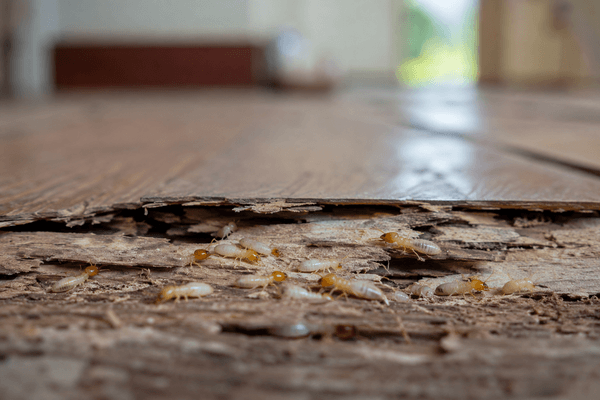
The most effective approach combines several principles: choosing naturally durable timber, keeping wood away from soil and persistent moisture, providing proper drainage and ventilation, keeping potential termite access points visible, and carrying out regular inspections.
In tropical environments such as Bali and Indonesia, these principles are particularly important.
At Kaltimber, we primarily work with reclaimed Ulin (Eusideroxylon zwageri), also known as Borneo ironwood, a remarkably dense hardwood naturally resistant to termites, decay and tropical weather conditions.
No timber should be described as completely termite-proof. However, selecting a naturally durable species such as Ulin can significantly reduce the vulnerability of the timber itself.
For exterior timber construction, there are three main durability concerns:
Sun and weather exposure
Moisture and decay
Termites and other wood-destroying insects
Good construction needs to address all three.
Is Ulin Wood Resistant to Termites?
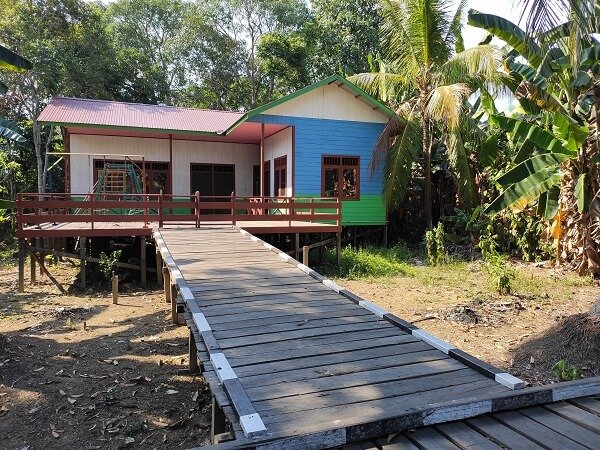
Yes. Ulin is naturally highly resistant to termites and decay, which is one of the reasons it has traditionally been used for demanding construction throughout Southeast Asia.
Ulin is an exceptionally dense tropical hardwood native to Borneo and parts of Southeast Asia. Its natural characteristics make the heartwood highly resistant to biological degradation and insect attack.
Historically, Ulin has been used for bridges, marine structures, posts, foundations, decking and other exterior applications where timber must withstand harsh tropical conditions.
Why Use Reclaimed Ulin?
Reclaimed Ulin has already spent decades in service before being recovered and processed for a new application.
Rather than harvesting new old-growth timber, existing Ulin can be recovered, selected and transformed into new decking, flooring, cladding and architectural timber components.
When genuine reclaimed Ulin is correctly selected and installed, its exceptional natural durability makes it particularly well suited to long-lasting construction in tropical environments.
Why Do Termites Attack Timber Buildings?
Many of the termites responsible for damage to buildings are subterranean termites.
They live underground and travel from moist soil toward sources of cellulose, including vulnerable timber and other materials within a building.
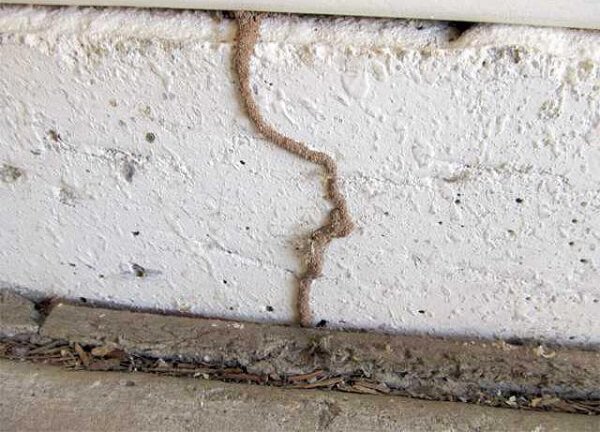
Because subterranean termites generally avoid prolonged exposure to open air, they often create characteristic mud tubes between the ground and the building.
These tubes are an important warning sign and one reason why good building design should keep potential termite access points visible and accessible for inspection.
Termite prevention is therefore not simply about treating wood. Moisture management, ventilation, separation from the ground and regular inspection are fundamental parts of termite-resistant construction.
How to Design Timber Construction to Reduce Termite Risk
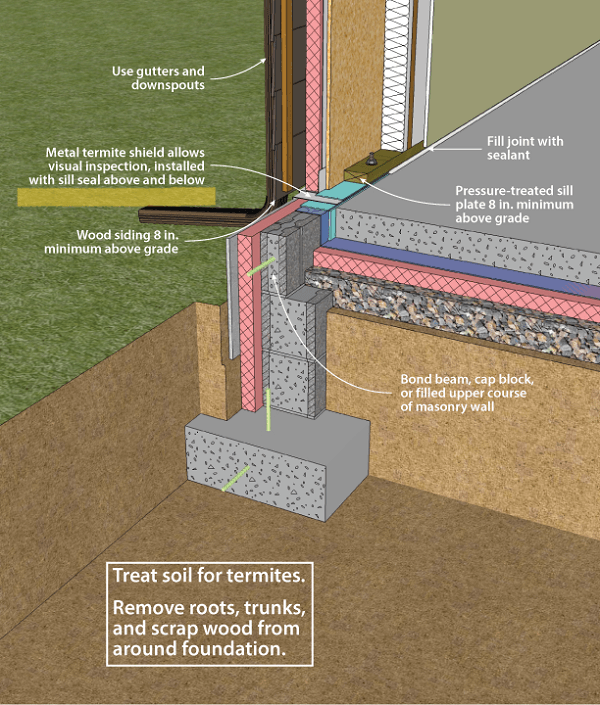
Good construction should make it difficult for termites to reach timber unnoticed.
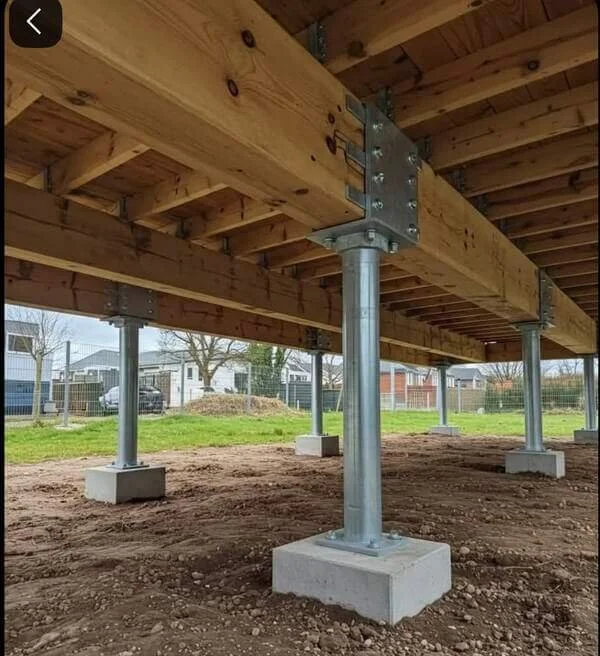
Whenever possible, structural timber should not be placed directly against soil or areas where moisture can remain permanently trapped.
Timber posts can, for example, be raised from concrete using appropriate steel post supports. Physical barriers or ant caps can also be incorporated into certain structural details to make termite movement more difficult and, importantly, easier to detect.
The principle is simple:
Keep timber away from soil and persistent moisture, provide airflow and drainage, and make possible termite access routes visible.
A Common Decking Mistake in Bali and Indonesia
One construction problem we regularly see in tropical environments is timber decking or stairs installed directly above poorly drained concrete with insufficient ventilation.
Water enters through the gaps between decking boards and accumulates underneath. Without sufficient drainage or airflow, the area can remain permanently damp.
This creates exactly the type of environment that termites and other wood-destroying organisms prefer.
Even when a naturally durable timber such as Ulin is used, good construction detailing remains important.
The concrete below exterior decking should allow water to drain efficiently, while sufficient space should be maintained beneath the timber structure for airflow and inspection.
Durable timber should never be used as an excuse for poor construction.
Do You Still Need Professional Termite Control?
Good construction and naturally durable timber can significantly reduce termite risk, but they do not replace professional pest management when an active infestation is present.
If termites are discovered in a building, the source and extent of the infestation should be properly assessed.
A professional termite-control specialist can determine whether baiting, targeted treatment, damaged timber replacement or another method is appropriate.
The best long-term strategy therefore combines appropriate timber selection, intelligent construction detailing, moisture control, regular inspection and professional termite treatment when necessary.
5 Rules for Preventing Termites in Timber Construction
1. Choose Naturally Durable Timber
Select a timber species suitable for the climate and intended application. Naturally durable hardwoods such as Ulin substantially reduce the vulnerability of timber elements to termites and decay.
2. Keep Timber Away From Soil and Persistent Moisture
Direct contact between timber, soil and permanently damp surfaces should be avoided whenever possible.
3. Provide Good Drainage and Ventilation
Exterior decking and timber structures need sufficient drainage and airflow so moisture cannot remain trapped beneath or around the wood.
4. Keep Termite Access Points Visible
Construction details should allow inspection. Hidden, inaccessible areas can allow termite activity to develop for a long time before it is discovered.
5. Call a Professional When an Infestation Is Found
Once termites have established themselves inside a building, professional assessment and treatment are the safest approach. Severely damaged timber may also need to be replaced.
Is Your "Ulin" Actually Ulin?
Material identification is another important and sometimes overlooked part of termite prevention.
We were once contacted about a supposedly termite-infested Ulin installation.
After inspecting the timber, we discovered that the wood was not Ulin at all, but a less-durable Shorea species that had been supplied for an unsuitable exterior application.
The lesson is important.
Specifying "ironwood", "hardwood" or even "Ulin" on a project is not enough if the timber supplied is not actually the specified species.
Correct species identification, reliable sourcing and appropriate installation are just as important as the specification itself.
At Kaltimber, reclaimed Ulin is carefully selected and processed for architectural applications where durability, stability and long service life are essential.
Frequently Asked Questions About Ulin and Termites
Is Ulin Termite-Proof?
No wood should be considered completely termite-proof. However, genuine Ulin (Eusideroxylon zwageri) has exceptionally high natural durability and strong resistance to termites and decay.
Is Reclaimed Ulin Resistant to Termites?
Yes. Reclaimed Ulin retains the natural durability of the species and has typically already survived decades of service. Correct species identification, selection and installation remain important.
Can Termites Still Enter a House Built With Ulin?
Yes. Even if the main timber elements are highly resistant, termites can travel through or around a structure in search of other cellulose-containing materials. This is why inspection and good construction detailing remain important.
What Is the Best Wood for Termite-Resistant Decking in Bali?
Naturally durable hardwoods are preferable for exterior decking in high-termite-risk tropical environments. Reclaimed Ulin is particularly suitable for Bali because of its natural resistance to termites, decay, moisture and tropical weathering.
Correct installation, drainage and ventilation remain essential regardless of the timber species selected.
Does Ulin Need Chemical Termite Treatment?
Genuine Ulin is naturally resistant to termites and is commonly selected specifically for its inherent durability. However, termite management should be considered at the level of the entire building rather than only the timber itself.
Building for Long-Term Durability
There is no single solution to termite prevention.
The most durable timber buildings combine the right material with the right construction techniques.
Using naturally resistant reclaimed Ulin can remove one of the major vulnerabilities of timber construction, while proper drainage, ventilation, separation from soil, accessible inspection points and regular maintenance protect the building as a whole.
For Kaltimber, this is also part of the logic behind reclaimed timber: using an exceptionally durable material that has already served for decades and giving it another long life in contemporary architecture.