Mother Trees and Ulin: Protecting the Future of Borneo Ironwood
What seed trees, underground fungal networks and long-term conservation mean for the future of Ulin (Eusideroxylon zwageri).
Some Ulin trees may live for more than a thousand years. Yet the next generation begins with a single heavy seed, one that may take six to twelve months to germinate. What does it take to protect a species whose future unfolds across human generations?
For Kaltimber, working with reclaimed Ulin ironwood is also a reason to care about the living forests from which this remarkable timber originated. Reusing existing wood and supporting forest conservation are different activities, but both reflect the conviction that an irreplaceable resource deserves more than short-term thinking.
The Giant That Begins Again as a Seed
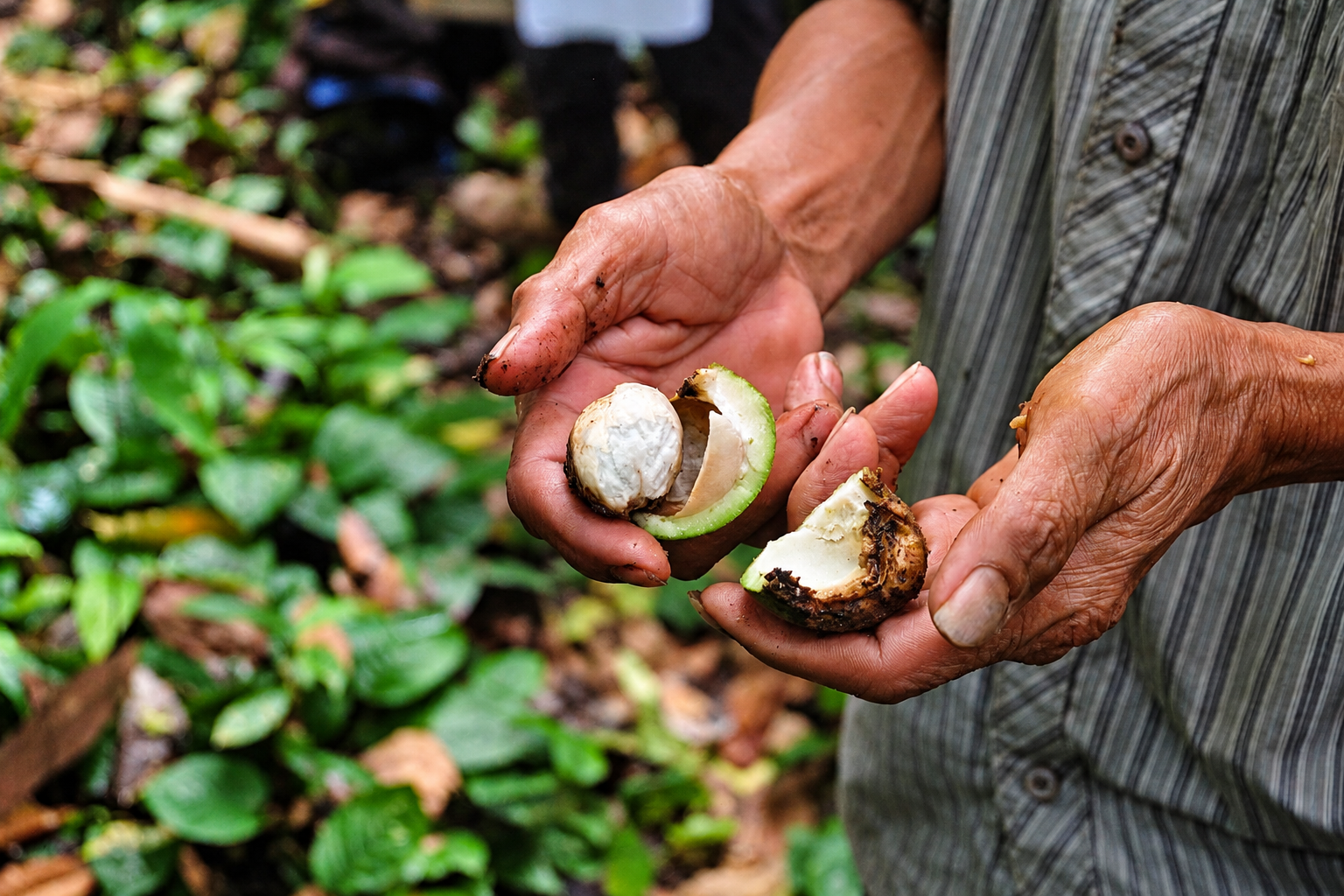
In a tropical forest, the future can be held inside a dark, heavy seed, protected by a hard shell and capable of taking months to germinate. Above it, a mature Ulin may have outlasted generations of people. Around it, light, water, fungi, animals and the structure of the forest help determine whether that seed becomes a new tree—or remains on the ground.
The phrase "mother tree" can suggest a simple story: an old tree that feeds, protects and guides the young. In forestry, it has a more practical meaning: a mature tree retained for its potential to produce seeds and contribute to regeneration.
In popular accounts of the "wood wide web", the phrase also appears in a stronger hypothesis—that large trees share resources with younger plants through fungal networks. These meanings are not interchangeable. Keeping a seed tree is a clear conservation practice; claims about resource sharing through shared fungal networks remain a subject of scientific debate and have not been demonstrated for Ulin.
A Mother Tree Is, First, a Potential Source of Seeds
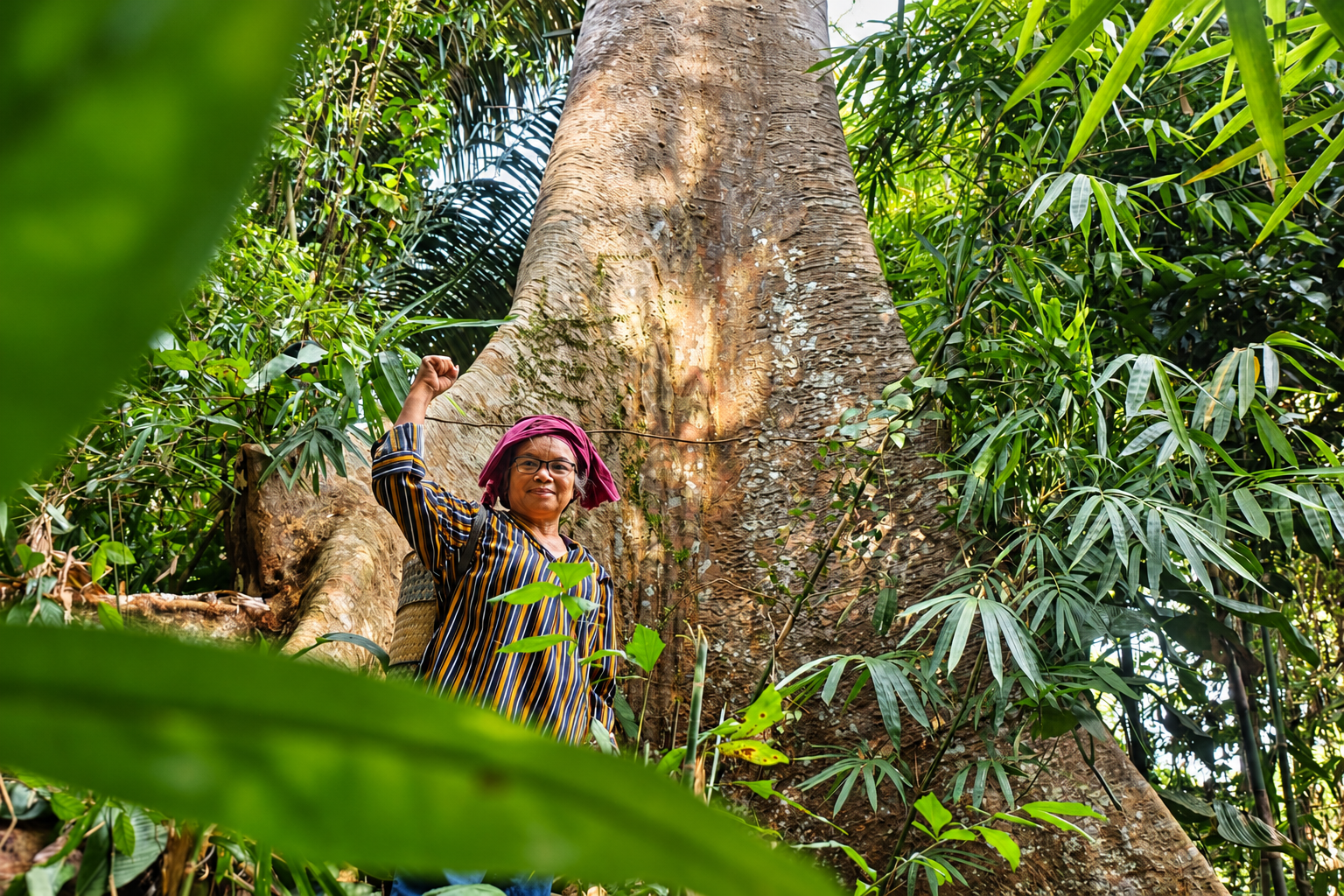
In forestry, a mother tree—also called a seed tree—is a mature individual retained as a seed source for a population or a restoration effort. It may also help researchers and forest managers observe flowering, fruiting and seed quality. Its presence matters, but it does not guarantee that a new generation will establish.
A seed's prospects depend on what happens after it falls or is dispersed: its viability, moisture and light conditions, predators, disease, competition and disturbance. A cluster of seedlings beneath a large tree may simply reflect where its seeds landed. Their presence alone does not show that the adult tree fed or protected them.
Large trees still shape the places where seedlings grow. Their crowns cast shade; their roots occupy and alter the soil; their leaf litter feeds organisms on the forest floor; and their trunks provide habitat. These effects can help some seedlings while increasing competition for light, water or nutrients for others.
A forest is not a harmonious family. It is a changing web of interactions, different from one species and site to the next.
Real Underground Networks, and a Debated Hypothesis
Many plants form mycorrhizal partnerships: fungal filaments extend the reach of roots, helping plants acquire water and nutrients while receiving carbon from photosynthesis. In some systems, fungal hyphae also connect the roots of multiple plants.
Researchers have measured carbon movement between tree species in field experiments, water transfer through shared networks under particular drought conditions, and defence signalling between connected plants in controlled experiments. [19] [20] [21]
These findings establish that transfer and signalling can occur in specific settings; they do not mean every forest network behaves alike or that every connected plant benefits.
The stronger popular claim—that a large tree preferentially sends resources to its own descendants through a shared fungal network and thereby improves their survival—is a separate question.
Researchers agree that mycorrhizal partnerships and some movement between plants are real; they continue to debate the route, scale and ecological importance of particular transfers, and whether they produce a net benefit for recipient seedlings.
In a 2023 open letter, Klein and colleagues argue that evidence for carbon movement is solid and accumulating, while Henriksson and colleagues and Karst, Jones and Hoeksema caution against reading detected movement as proof of meaningful, beneficial support from mature trees. [8] [9] [22]
Two influential books—Suzanne Simard's Finding the Mother Tree and Merlin Sheldrake's Entangled Life—offer accessible explorations of forest relationships and fungal life. [23] [24]
For Ulin, however, the sources reviewed for this feature do not demonstrate that mature trees share resources with their seedlings through a mycorrhizal network. That remains a worthwhile research question, not an established characteristic of the species.
Ulin, a Tree of the Forests of Sumatra and Borneo
Ulin, Eusideroxylon zwageri, belongs to the laurel family, Lauraceae. The Royal Botanic Gardens, Kew, lists its native range as Sumatra and Borneo. [1]
In their study of sites in Kalimantan, Sidiyasa, Atmoko, Ma'ruf and Mukhlisi describe Ulin in humid tropical forest on non-flooded ground—from areas near streams to slopes and ridges, at elevations of up to about 500 metres and, in some locations, 625 metres.
The soils they observed were often sandy and acidic, with low levels of major nutrients. [2] A humid forest habitat does not mean that the species requires permanently waterlogged soil.
That distinction matters in restoration. Planting an Ulin is not simply a matter of putting a seedling in the ground. The site must suit the species, and its canopy must be managed for the plant's stage of growth.
Seedlings and saplings tolerate some shade; older juveniles need more light to grow vigorously. Gradually opening the canopy may therefore be preferable to exposing young trees abruptly to full sun. [3]
A Heavy Seed and a Long Wait
Ulin produces a fleshy fruit containing one large seed enclosed in a hard shell. Forestry references report that natural germination may take six to twelve months.
The seeds are described as recalcitrant: they do not tolerate drying well and are difficult to store under ordinary conditions. [3] Successful collection and propagation therefore depend on keeping seeds fresh and moist.
ReplantWorld reports field observations of germination rates of 9–25% without treatment and 70–80% after certain preparations. The partner also estimates that 5–20 seedlings may establish for every 100 seeds that fall.
ReplantWorld identifies these as field observations, not published Ulin-wide rates. A 2019 experiment compared treatments on seeds from Bali and Kalimantan. Under that study's conditions, treatments affected how quickly seeds germinated, but did not produce a significant difference in final germination percentage. [4] [10]
A nursery result does not automatically describe what happens in a forest.
PROSEA reports that some Ulin may begin flowering at around 15–20 years, while fruiting is irregular and often occurs every two or three years. [3] That reference does not establish the age at which a tree first produces viable seeds.
A weekly study of one Ulin at Bogor Botanical Gardens from 2001 to 2004 recorded frequent flowering but very little fruit; the authors suggested that natural pollinators may have been absent from the ex-situ collection. [12]
By contrast, a synthesis chapter on special forest ecosystems says Ulin may take more than 60 years to flower and fruit. [11]
The sources available do not settle the age at which Ulin first produces viable seeds. Around 50 years has been discussed as a working scenario emerging from our literature research and exchanges with our restoration partner. It is not an established biological threshold or a scientifically verified age of first viable seed production.
Producing seeds does not, by itself, mean that they are viable, germinate or establish a new generation. [3] [11] [12]
What Research Says About Ulin Mother Trees
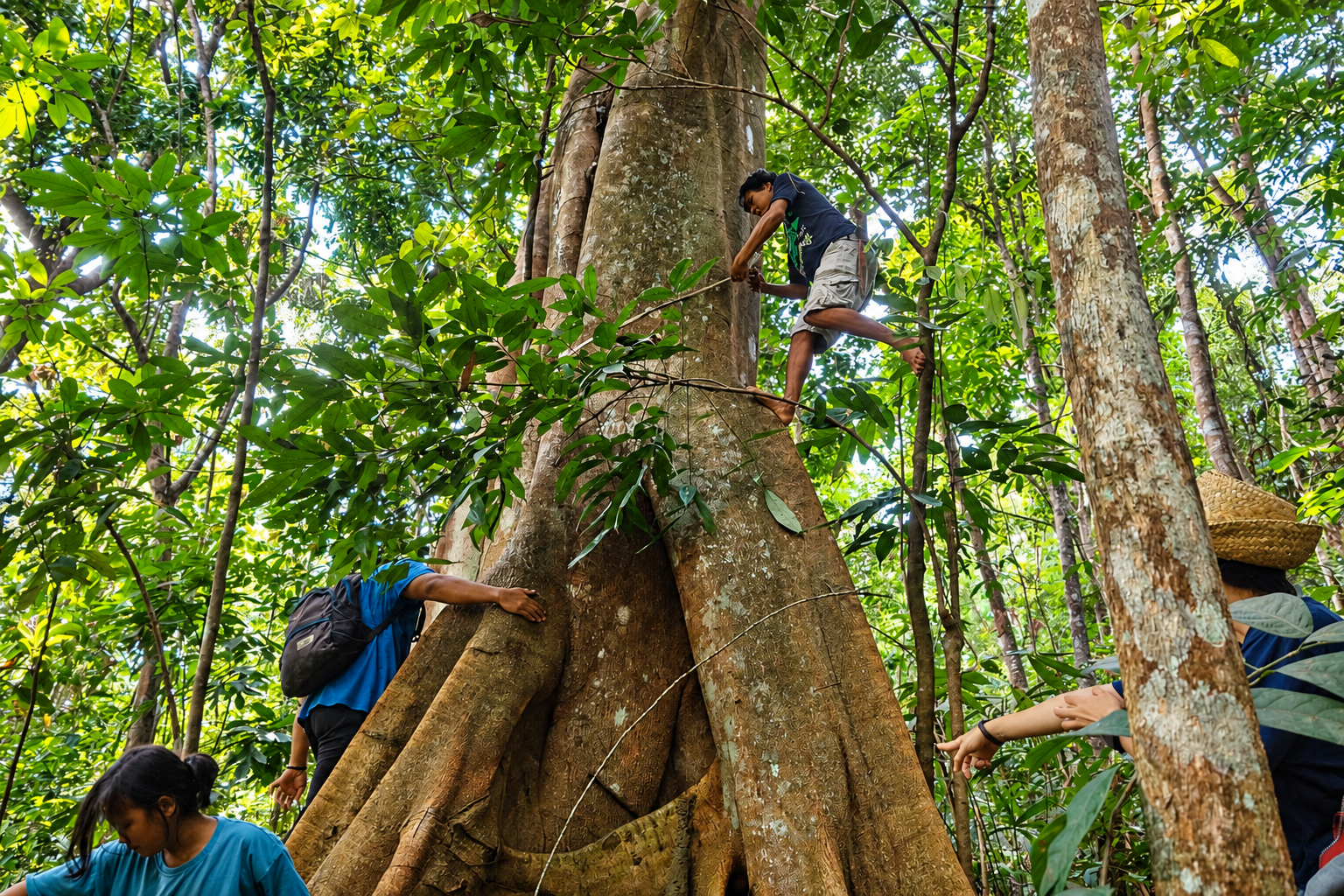
Sidiyasa and colleagues use the Indonesian term pohon induk, or mother tree, specifically in their study of Ulin.
In 2009, they surveyed three sites in Kalimantan. They recorded trees at least 35 cm in diameter, then assessed their suitability as seed trees using quality criteria and a scoring system. Depending on the site, 22.11–32.30% of trees in that diameter class were judged suitable. [2]
The 35 cm figure was an inventory threshold, not proof that a tree was reproductive and not a universal biological threshold. Each candidate required further assessment.
ReplantWorld's field-based recommendations include a target of 20–30 healthy mother trees in a restoration area and an indicative spacing of 3 × 4 metres between seedlings. These describe partner practice, not peer-reviewed standards or universal requirements for Ulin.
Protecting a reproductive tree has practical value. A living, mature Ulin can contribute to the local supply of seeds and is already part of the forest stand. Keeping it alive means young seedlings do not have to replace all of its functions immediately.
But seed trees alone cannot guarantee regeneration. Habitat, seed quality, germination conditions and the security of the site matter too.
Growth Figures Depend on What Is Measured
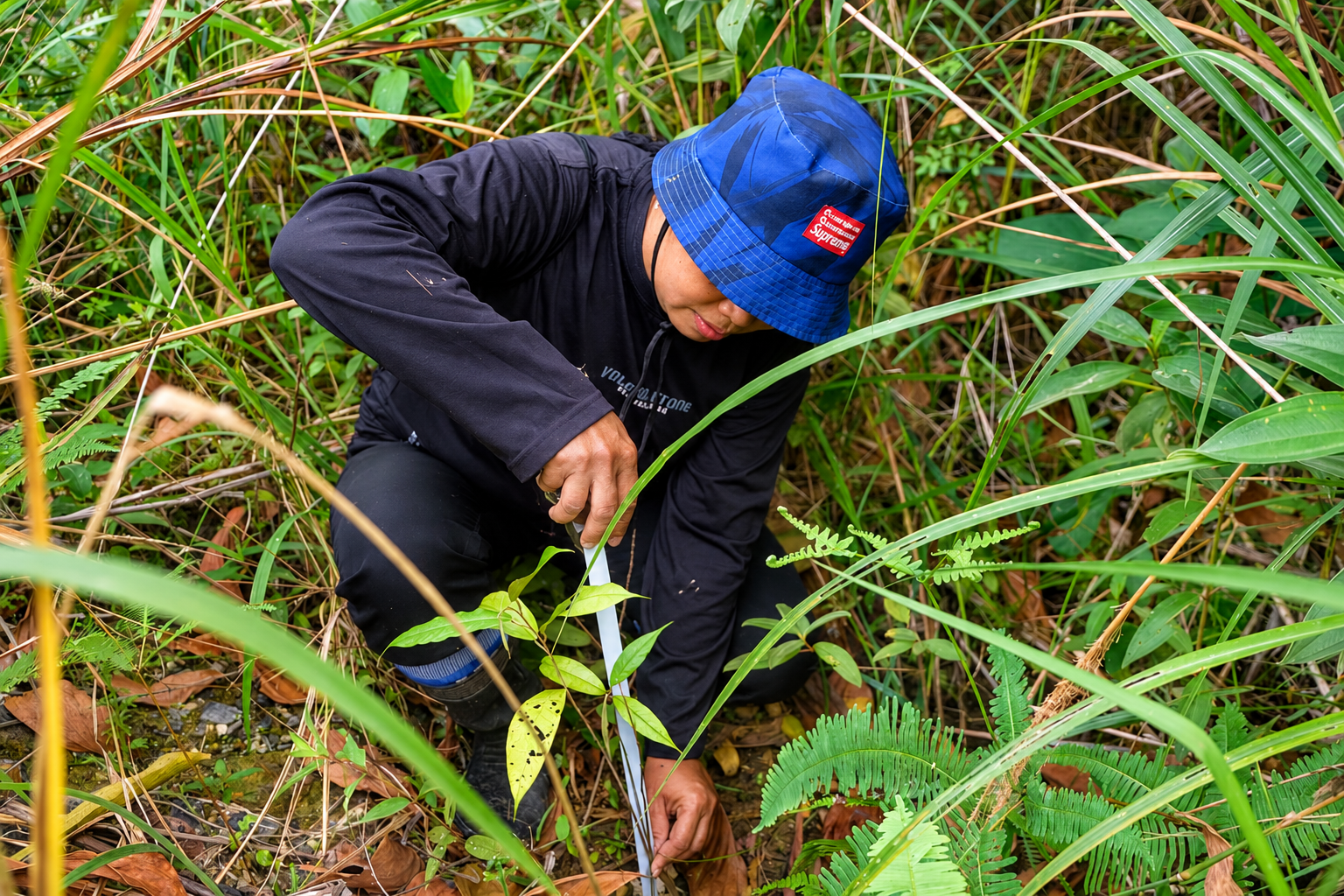
The often-cited figure of 0.058 cm per year comes from Kurokawa and colleagues' study of 15 logged Ulin stumps in Kubah National Park, Sarawak.
The researchers analysed wood samples using accelerator mass spectrometry and radiocarbon dating to estimate the trees' ages. They report a mean radial growth rate of 0.058 cm per year—0.58 millimetres of growth outward from the trunk's centre per year. [5]
This is a long-term estimate derived from a small, specific sample, not a direct annual measurement of living trees across the species' range.
Other studies report figures closer to 0.5 cm per year, but measure diameter growth in different settings.
Wahjono and Imanuddin analysed permanent sample-plot data from 37 logging concessions in Kalimantan and reported average diameter increments of 0.46–0.68 cm per year in logged-over forests. [13]
Suyanto and colleagues reported an average diameter growth of 0.47 cm per year for Ulin planted beneath rubber in Telagalangsat Village, South Kalimantan; one treatment reached 0.54 cm per year. [14]
Radial growth and diameter increment are related—under a simple geometric conversion, 0.058 cm of radial growth would correspond to about 0.116 cm in diameter—but figures from separate studies should not be treated as directly interchangeable.
Together, they show why a single growth rate should not be stated as universal.
The radiocarbon study also found that some Ulin can live for more than a thousand years. [5]
That extraordinary lifespan changes the scale of time. A recent planting may be valuable, but it cannot quickly recreate the structure of an old forest.
Protecting mature trees, the forest around them and the conditions that allow seedlings to survive remains essential. Planting and protection meet different, complementary needs.
From Timber Use to Conservation Responsibility
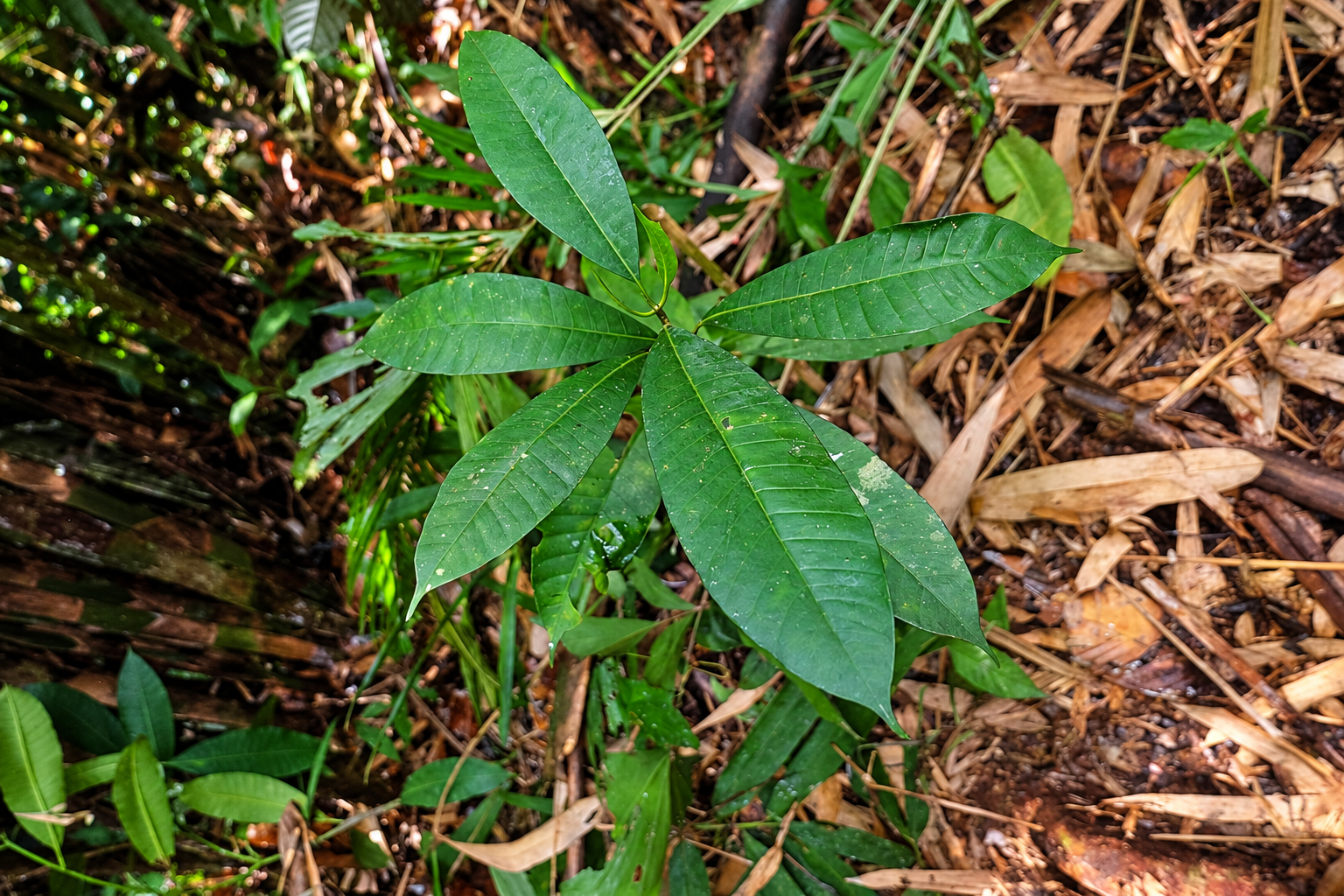
Ulin is valued for the qualities of its wood. Riskan Effendi documented its uses and potential, the pressures associated with exploitation, and the policies needed for its long-term management in Kalimantan. [6]
Sukaesih Pradjadinata and Murniati reviewed the species' bioecology, management and conservation efforts, both in situ and ex situ, along with the challenges they face. [7]
At Kaltimber, our work with reclaimed Ulin has taught us to appreciate a material whose remarkable durability allows it to serve successive generations.
Whether transformed into reclaimed Ulin decking for outdoor spaces or solid reclaimed Ulin flooring for architectural interiors, timber recovered from existing structures can be given a new purpose without relying on newly harvested Ulin for those products.
But the exceptional longevity of the timber must never be confused with an unlimited supply of living trees. Reusing existing wood and protecting the species in its natural habitat are complementary responsibilities.
The wider Kaltimber restoration work began earlier; its Ulin-specific planting focus dates from 2024.
The current Kaltimber–ReplantWorld objective is to plant 1,200 Ulin trees annually, equivalent to an average of 100 per month. This is the programme's current commitment, not a statement of cumulative survival.
Planting is scheduled according to seasons and local ecological conditions. ReplantWorld says site plans may be reassessed after significant ecological disturbances, including fire.
As of October 2026, forest and land fires have affected parts of Kalimantan during recent months. Indonesian authorities documented firefighting operations during the dry season.
These conditions can complicate or temporarily prevent restoration work in affected areas. They do not mean that every planting site is burning. Decisions must reflect actual local conditions rather than a rigid planting calendar.
The Mother Tree programme protects mature Ulin trees already standing as well as restoring habitat through new plantings.
ReplantWorld maps and protects these mother trees, while monitoring seedling establishment and survival at planting (H0), then at 30, 90 and 180 days and one year.
Monitoring helps guide maintenance, replacement planting and adjustments to restoration methods. Longer-term monitoring arrangements are currently being developed.
For each sponsored tree in this partnership, Kaltimber receives a tree NFT containing its location, planting evidence, cost and monitoring data.
ReplantWorld says GPS-linked georeferenced photographs and fixed and dynamic progress data are available to sponsors and the public, and that planting costs and programme fees are published through the NFTs.
The record can show what a planting costs; it cannot put a price on the ecological value of a living Ulin or the forest that sustains it.
ReplantWorld leads field implementation, digital monitoring, verification and progress reporting. The programme also involves Dayak Ngaju and Dayak Ma'ayan communities, whose local knowledge and participation contribute to its field approach.
Why Transparency Became Non-Negotiable
Our previous restoration partnership taught us a difficult lesson: a planting commitment is not the same as evidence of what happened on the ground.
Despite repeated requests, we struggled to obtain the photographic documentation and visibility we considered necessary. When we questioned the limited documentation available, the response did not resolve our concerns.
We chose to end that partnership rather than continue without sufficient confidence in our ability to assess its work.
This is an account of our experience, not a claim that planting did not take place.
That experience changed our expectations. With ReplantWorld, the emphasis is on identifiable trees, georeferenced evidence and documented monitoring.
The partnership is recent, so we are not claiming a verified long-term survival rate. Monitoring beyond the first year is still being developed.
What matters now is establishing a transparent basis for accountability over time.
A Forest Is More Than a Planting Site
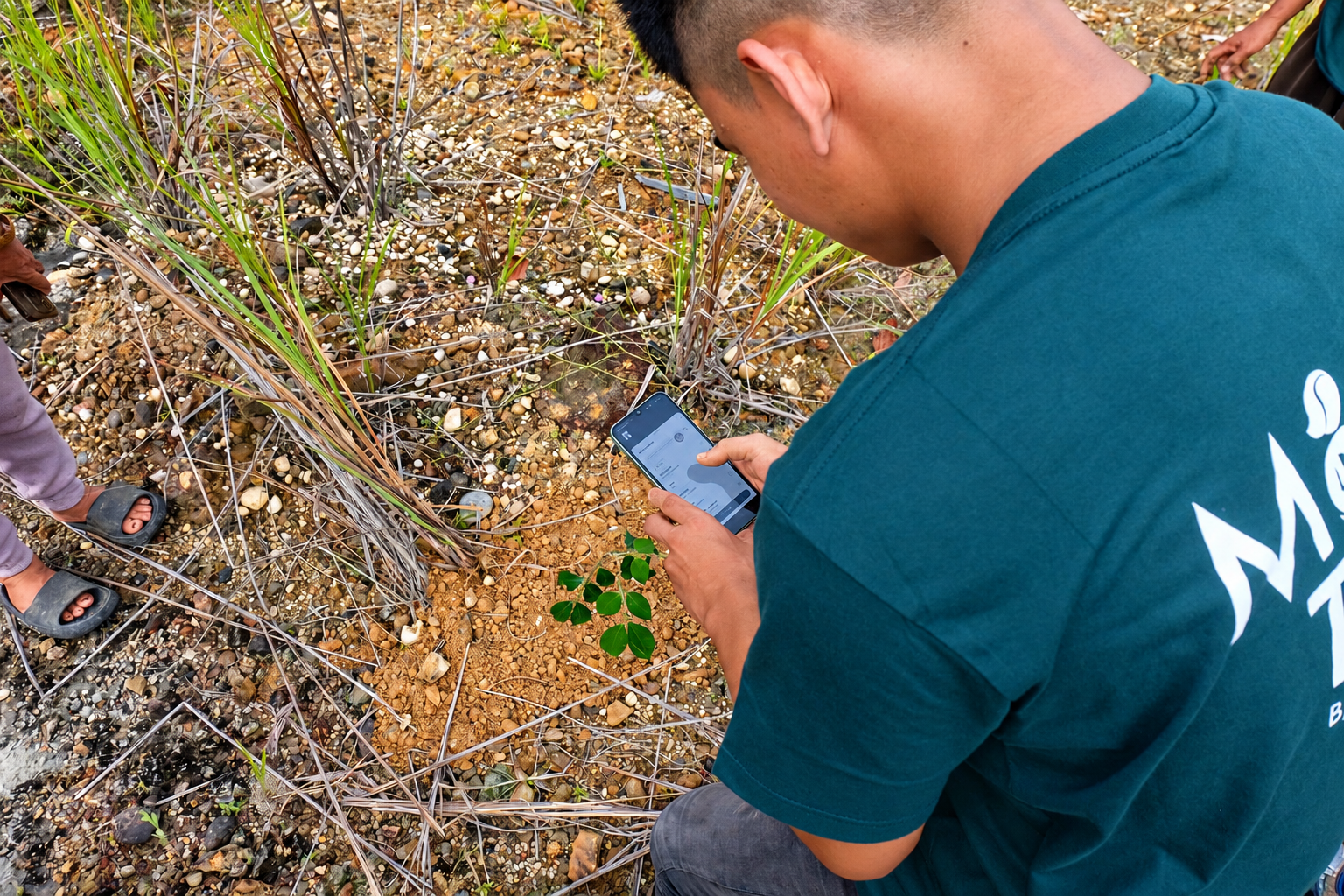
Planting can help. But restoring a slow-growing species is measured over years and generations, not by the number of seedlings put in the ground.
A credible account distinguishes seeds collected, seedlings planted, survival through dry seasons, growth, genetic diversity, maturity and the future ability to produce seeds.
A delivered seedling is not yet an established tree; an established tree is not yet a viable population.
The question of mother trees brings us back to a practical one: what must remain alive in the forest for Ulin to have a future?
Protect reproductive adults and their habitat, then follow what flowers, fruits, germinates, survives and grows.
Underground networks remain a compelling area of research. For Ulin, current species-specific studies and field observations provide firmer ground than claims that adult trees transfer resources to young trees.
An old Ulin cannot be replaced in a season. Its value lies in its age, its potential reproductive role and its place in an ecosystem.
A credible conservation effort must protect the mature trees already standing, plant where conditions allow and make progress traceable.
The long life of Ulin calls for measurable goals—and for claims that stay within the evidence.
A Commitment Beyond One Lifetime
Trees planted in the Ulin-focused programme in 2024 will reach 50 years of age in 2074, although that age does not guarantee reproduction.
I may not be here to see what becomes of them.
My hope is that someone will have taken up the work—and that the trees will have had the protection and conditions they need to produce another generation.
A planting target alone cannot secure that future. The work depends on protecting existing mother trees, supporting local stewardship, learning from each cohort and keeping the forest standing around it.
If you have knowledge, research capacity or a willingness to help with long-term Ulin conservation, Kaltimber and ReplantWorld welcome your interest in taking part.
Frequently Asked Questions About Mother Trees and Ulin
What does "mother tree" mean for Ulin?
In forestry, it means a mature tree retained for its potential role as a seed source and its possible contribution to natural regeneration. The term does not prove that the tree directly feeds its descendants through an underground network.
Do trees communicate through underground networks?
In particular experiments, mycorrhizal networks have carried defence signals between connected plants. Researchers have also documented carbon and water movement in specific plant systems. This does not establish a universal system of intentional communication, nor does it prove that every transfer benefits the receiving plant. No source reviewed for this feature demonstrates the mechanism in Ulin. [8] [9] [19] [20] [21] [22]
At what age can Ulin produce seeds?
The publications reviewed do not give a conclusive age for the first production of viable seeds. PROSEA reports that flowering may begin at around 15–20 years, while a synthesis chapter says Ulin may take more than 60 years to flower and fruit. A study at Bogor also recorded frequent flowering but very little fruit. [3] [11] [12]
A working scenario of approximately 50 years emerged from our literature review and discussions with our restoration partner. The cited sources do not establish this figure as a threshold for all populations.
How many trees are needed for a self-sustaining Ulin population?
There is no scientifically established universal number for Ulin. A population is better judged by whether it continues to produce viable seeds, recruit seedlings and sustain young trees over time without planting or replacement.
A FAO guideline recommends at least 300 adult interbreeding trees in a gene-conservation reserve, under specified assumptions; this is a conservation-planning guideline, not proof that 300 trees make any Ulin population self-sustaining.
A separate FAO recommendation advises against collecting seed from populations with fewer than 500 reproductive adults, which concerns seed-source genetic diversity rather than a minimum population size.
In one Sabah forest study, adult Ulin trees were present but seedling establishment was failing—evidence that a headcount alone cannot guarantee regeneration. [15] [16]
How long does an Ulin seed take to germinate?
Natural germination may take six to twelve months. Nursery results vary by seed and protocol; the ReplantWorld figures in this feature are field observations, not universal rates.
Does the programme protect mature mother trees?
Yes. ReplantWorld says the programme maps and protects mother trees already present, alongside monitoring newly planted trees.
How are young trees monitored?
ReplantWorld reports checks at planting (H0), then after 30, 90 and 180 days and one year. The trees are catalogued; GPS-linked georeferenced photographs and progress data are available through public-facing tree NFTs for sponsors and the public.
Monitoring helps guide maintenance and replacement planting. Longer-term monitoring arrangements are being developed.
Is planting Ulin enough to restore a forest?
No. Planting needs to be accompanied by protection for mature trees and their habitat, long-term monitoring and adjustments to local site conditions.
About the Author
Guillaume Carnevale is CEO of Kaltimber.
This article draws on published scientific research, field observations and conversations with ReplantWorld. AI-assisted editorial tools supported the organisation and drafting of the content. Scientific findings, partner observations and working interpretations are distinguished throughout. The author remains responsible for the article's content and attributions.
About ReplantWorld
ReplantWorld works on ecosystem restoration in collaboration with local communities and partners. In the Kaltimber programme, it leads field implementation, tree-level documentation and progress reporting. Its tree records are available through its own platform for those wishing to explore the evidence and follow the programme.
Scientific References and Further Reading
[1] Royal Botanic Gardens, Kew. Plants of the World Online: Eusideroxylon zwageri. Taxonomy and native range. View reference.
[2] Sidiyasa, K., Atmoko, T., Ma'ruf, A. & Mukhlisi (2013). Keragaman morfologi, ekologi, pohon induk, dan konservasi ulin di Kalimantan. Jurnal Penelitian Hutan dan Konservasi Alam, 10(3), 241–254. View research.
[3] PROSEA. Eusideroxylon zwageri. Botanical description, habitat, growth, flowering and fruiting. View reference.
[4] Purba, J. H., Sasmita, N., Komara, L. L. & Nesimnasi, N. (2019). Comparison of seed dormancy breaking of Eusideroxylon zwageri from Bali and Kalimantan soaked with sodium nitrophenolate growth regulator. Nusantara Bioscience, 11(2), 146–152. View research.
[5] Kurokawa, H., Yoshida, T., Nakamura, T., Lai, J. & Nakashizuka, T. (2003). The age of tropical rain-forest canopy species, Borneo ironwood (Eusideroxylon zwageri), determined by 14C dating. Journal of Tropical Ecology, 19(1), 1–7. View research.
[6] Effendi, R. (2009). Kayu ulin di Kalimantan: potensi, manfaat, permasalahan dan kebijakan yang diperlukan untuk kelestariannya. Jurnal Analisis Kebijakan Kehutanan, 6(3), 161–168. View research.
[7] Pradjadinata, S. & Murniati (2014). Pengelolaan dan konservasi jenis ulin di Indonesia. Jurnal Penelitian Hutan dan Konservasi Alam, 11(3), 205–223. View research.
[8] Henriksson, N. et al. (2023). Re-examining the evidence for the mother tree hypothesis – resource sharing among trees via ectomycorrhizal networks. New Phytologist, 239, 19–28. View research.
[9] Karst, J., Jones, M. D. & Hoeksema, J. D. (2023). Positive citation bias and overinterpreted results lead to misinformation on common mycorrhizal networks in forests. Nature Ecology & Evolution, 7, 501–511. View research.
[10] ReplantWorld. Written responses to Kaltimber on field observations, mother-tree protection, monitoring and partnership credit, 15 October 2026. Unpublished communication.
[11] Göltenboth, D., Langenberger, G. & Widmann, P. (2006). Special Forest Ecosystems. In: Göltenboth, F., Timotius, K. H., Milan, P. P. & Margraf, J. (eds.), Ecology of Insular Southeast Asia, pp. 385–399. Elsevier.
[12] Fijridiyanto, I. A., Mujahidin & Hatta, H. (2011). Fenologi pohon ulin di Kebun Raya Bogor. Proceedings of the National Workshop on Conservation of Threatened Tree Species, pp. 132–139.
[13] Wahjono, D. & Imanuddin, R. (2011). Sebaran, potensi dan pertumbuhan/riap ulin di hutan alam bekas tebangan di Kalimantan. Proceedings of the National Workshop on Conservation of Threatened Tree Species, pp. 3–13. View publication.
[14] Suyanto, S., Nugroho, Y., Susilawati & Pasah, M. (2024). Ulin Growth Rate under the Rubber Plant. International Conference of Forestry and Environment. View research.
[15] FAO. Conservation of tropical forest genetic resources: IPGRI's efforts and experiences. View reference.
[16] Qie, L. et al. (2019). Impending Regeneration Failure of the IUCN Vulnerable Borneo Ironwood (Eusideroxylon zwageri). Tropical Conservation Science, 12. View research.
[17] Banin, L. F. et al. (2023). The road to recovery: a synthesis of outcomes from ecosystem restoration in tropical and sub-tropical Asian forests. Philosophical Transactions of the Royal Society B, 378, 20210090. View research.
[18] Van Nieuwstadt, M. G. L. & Sheil, D. (2005). Drought, fire and tree survival in a Borneo rain forest. Journal of Ecology, 93, 191–201. View research.
[19] Simard, S. W., Perry, D. A., Jones, M. D., Myrold, D. D., Durall, D. M. & Molina, R. (1997). Net transfer of carbon between ectomycorrhizal tree species in the field. Nature, 388, 579–582. View research.
[20] Egerton-Warburton, L. M., Querejeta, J. I. & Allen, M. F. (2007). Common mycorrhizal networks provide a potential pathway for the transfer of hydraulically lifted water between plants. Journal of Experimental Botany, 58(6), 1473–1483. View research.
[21] Babikova, Z. et al. (2013). Underground signals carried through common mycelial networks warn neighbouring plants of aphid attack. Ecology Letters, 16(7), 835–843. View research.
[22] Klein, T., Rog, I., Livne-Luzon, S., van der Heijden, M. G. A. & Körner, C. (2023). Belowground carbon transfer across mycorrhizal networks among trees: Facts, not fantasy. Open Research Europe, 3, 168. View research.
[23] Simard, S. (2021). Finding the Mother Tree: Uncovering the Wisdom and Intelligence of the Forest. Penguin Books. View book.
[24] Sheldrake, M. (2020). Entangled Life: How Fungi Make Our Worlds, Change Our Minds and Shape Our Futures. Random House. View book.