
How Air Conditioning Affects Wood Flooring in Tropical Climates
In Bali, the climate outside may be humid while air conditioning creates a very different environment inside—one that must be understood before installing solid wood flooring.
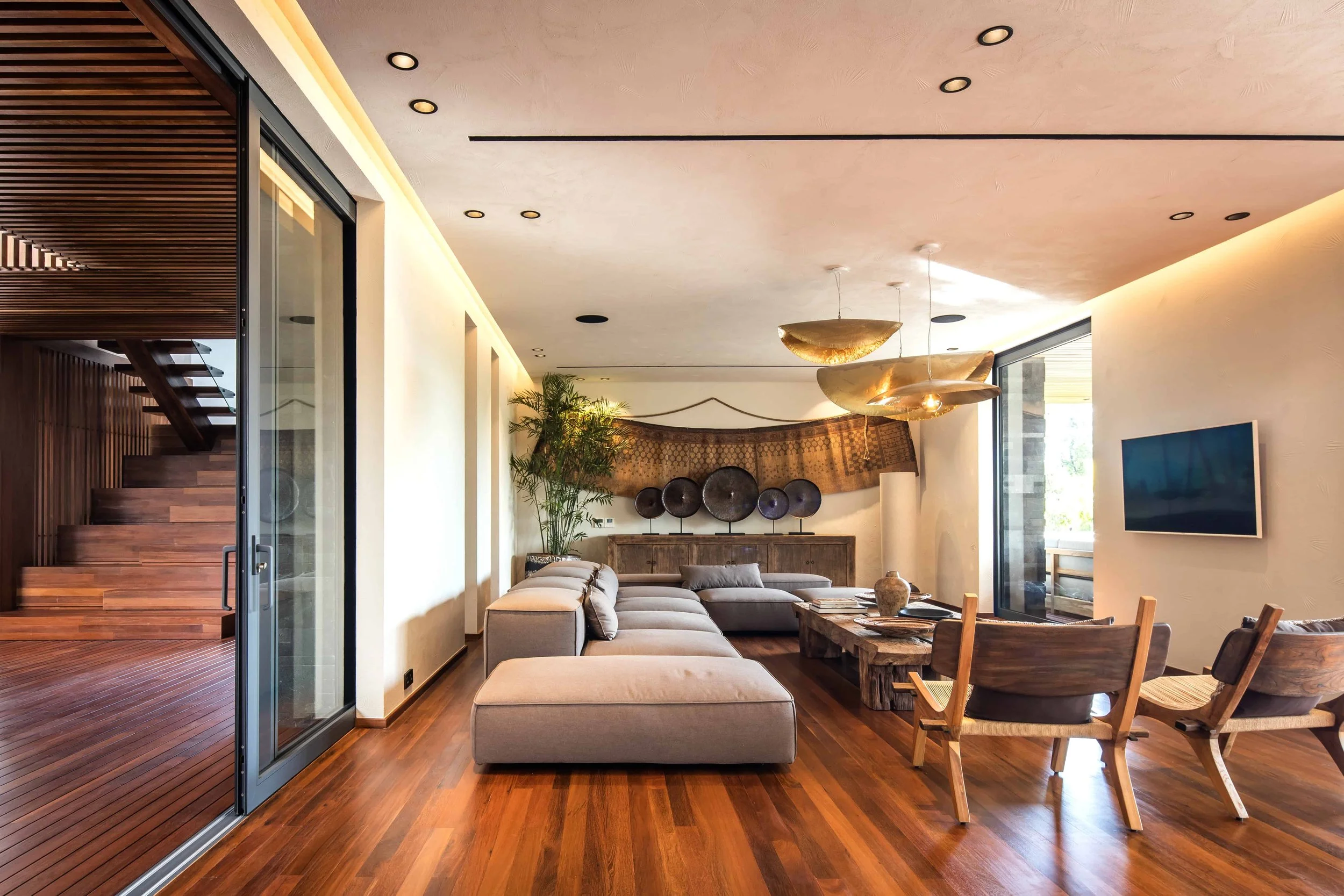
In tropical regions such as Bali, it is easy to assume that timber flooring will always live in a humid environment. In reality, modern air-conditioned interiors can create conditions very different from the climate outside.
A villa may sit in warm, humid air while the bedrooms, living spaces or hotel suites inside are cooled for most of the day. As air conditioning changes indoor temperature and relative humidity, solid wood flooring responds to that new environment.
The result is simple but important: even a naturally durable tropical hardwood must be installed with moisture movement in mind.
Wood flooring remains responsive after installation
Wood is hygroscopic. This means it absorbs and releases moisture in response to the surrounding air. Once timber has been dried, machined and installed, this behaviour does not stop.
Over time, wood tends toward what is known as its equilibrium moisture content, or EMC. EMC is the moisture content at which the wood is in balance with the temperature and relative humidity of its environment.
If surrounding air becomes drier, the timber gradually loses moisture. If the environment becomes more humid, the timber can absorb moisture again.
According to the USDA Forest Products Laboratory , matching timber moisture content as closely as practical to its expected in-service conditions is one of the fundamental ways to reduce unwanted dimensional movement.
This principle applies to all solid wood flooring, including dense tropical species such as Ulin.
Why an air-conditioned room is a separate climate
The outdoor climate does not necessarily describe the environment that the finished floor will experience.
In Bali, outdoor air may remain humid for long periods. Inside an air-conditioned villa, resort or residence, however, the combination of cooling and dehumidification can produce a noticeably drier microclimate.
Timber installed under one set of conditions may therefore adjust after the building becomes occupied and the air-conditioning system begins operating normally.
If the flooring loses moisture, some shrinkage across the width of the boards can occur. Depending on the flooring specification and installation method, this may become visible as small gaps between boards.
The objective is not to prevent wood from moving completely. That is unrealistic. The objective is to understand the likely range of movement and design the floor so that normal movement does not become a problem.
Continuous and intermittent cooling create different conditions
Not every air-conditioned building behaves in the same way.
A hotel room where air conditioning operates regularly can develop relatively stable indoor conditions. A private villa used only periodically may behave differently. The property may remain closed and humid for several days before the air conditioning is switched on strongly when occupants arrive.
In that situation, the floor may experience repeated changes between relatively humid and relatively dry conditions.
Designers, contractors and installers therefore need to think about how the building will actually be used rather than relying only on outdoor climate data.
Acclimation is not simply a fixed number of days
One of the most persistent misconceptions around timber flooring is that acclimation can be reduced to a simple instruction such as “leave the flooring inside for seven days.”
Time alone does not tell you whether the flooring is ready.
The important question is whether the moisture condition of the flooring is appropriate for the environment in which it will be installed.
Industry guidance from WoodSolutions emphasizes assessing both the site conditions and the moisture content of the timber before installation. Relative humidity, expected in-service conditions and the difference between delivered moisture content and operating conditions all matter.
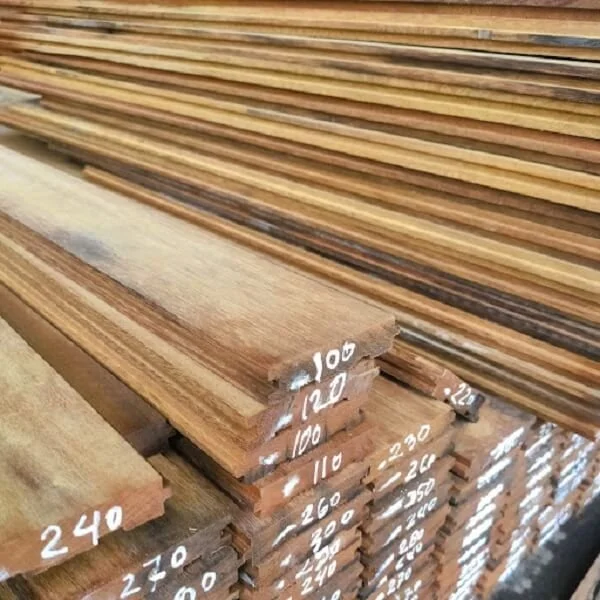
Flooring should therefore be stored and conditioned in a way that reflects the actual project environment. Simply delivering timber to a construction site does not automatically mean it is acclimating correctly.
The building must be ready before the flooring
Timber flooring should not be treated as just another material to install while major construction work is still creating moisture inside the building.
Wet trades such as concrete work, plastering, screeding and painting can introduce significant moisture. If flooring is delivered or installed while the building is still drying, the conditions recorded at that moment may not represent the environment the floor will experience later.
Before installation, the building should generally be weather-tight, major wet work should be completed, and the interior should be approaching its normal operating condition.
Where air conditioning will be used regularly after completion, it should ideally be operating under conditions representative of future use before final flooring decisions are made.
The subfloor can be the hidden moisture source
Indoor air is only part of the moisture equation.
A concrete slab or other subfloor can contain substantial residual moisture even when the room itself feels dry. This creates the possibility of two opposing conditions: air conditioning drying the upper surface while moisture is still entering the flooring system from below.
For this reason, subfloor testing is an essential part of professional flooring preparation.
The National Wood Flooring Association recommends that jobsite conditions meet the relevant flooring and installation requirements before wood is delivered and installed.
Subfloor preparation, moisture control systems and adhesive selection must therefore be considered as part of the complete flooring system rather than as separate issues.
Expansion allowance should be designed, not hidden
Solid timber flooring should be given appropriate room for normal dimensional movement.
The amount and location of movement allowance depend on factors including board width, room dimensions, flooring profile, installation method, expected humidity range and the characteristics of the timber.
Perimeter clearances, transitions and intermediate movement provisions may be required depending on the project.
These details should be planned before installation begins rather than discovered after a floor has already been fixed in place.
A practical pre-installation protocol
For architects, contractors and property owners working with solid hardwood flooring in a tropical climate, a sensible process includes the following:
- Define how the building will actually be occupied and air-conditioned.
- Complete major wet construction work before flooring installation.
- Make sure the building envelope is weather-tight.
- Allow concrete, screeds and other wet materials sufficient drying time.
- Operate the air-conditioning system under representative conditions where practical.
- Measure indoor temperature and relative humidity.
- Measure the moisture content of the timber using appropriate equipment and procedures.
- Test the subfloor using a suitable moisture-testing method.
- Compare the flooring condition with the expected in-service environment.
- Condition the flooring appropriately before installation where required.
- Plan expansion allowances, transitions and installation details in advance.
- Record the relevant site measurements before installation begins.
This process is more reliable than relying on a calendar alone.
Reclaimed Ulin is durable, but building physics still matter
Ulin, also known as Borneo ironwood, is an exceptionally dense and naturally durable tropical hardwood. Kaltimber manufactures reclaimed Ulin flooring in Bali from timber recovered from existing Indonesian structures and remilled for new architectural use.
Its durability makes Ulin particularly well suited to demanding tropical projects, but durability should not be confused with dimensional immunity.
Like other solid woods, Ulin still responds to moisture changes.
A correctly specified reclaimed hardwood floor combines the natural performance of the timber with proper moisture management, subfloor preparation and professional installation.
Measure the environment rather than assuming it
Tropical architecture creates some unusual combinations of conditions.
A building can sit in a humid climate while maintaining relatively dry air-conditioned rooms. At the same time, a concrete slab beneath those rooms may still contain construction moisture.
That is why the best flooring decisions are based on measurements rather than assumptions.
Check the timber. Check the subfloor. Check the relative humidity. Understand how the building will be used after the project is completed.
When these conditions are understood before installation, solid hardwood flooring can be specified and installed in a way that allows natural movement without compromising the finished result.
For tropical projects using reclaimed Ulin, that combination of durable material and careful installation planning is what creates a floor designed for long-term use.