
JIA Curated doesn't feel like most design exhibitions.There are no endless rows of identical booths, no artificial walls neatly separating one brand from the next. At Pengembak Beach, the trees stay where they are, the ground refuses to be perfectly level, and architecture has to find its place within the landscape.
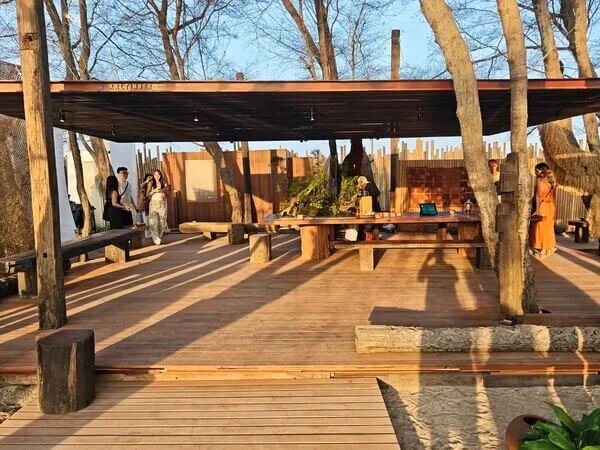
For Second Growth, that wasn't a constraint. It was the starting point.
Created by Kaltimber and Alexis Dornier for JIA Curated 2026, the pavilion was an interpretation of the exhibition's Nature Weave theme — an exploration of what happens when architecture, reclaimed material and the natural environment are allowed to overlap rather than compete.
And for five days in August, that idea became something people could actually walk into.
Woven into the landscape
The concept behind Second Growth was deliberately simple: make a pavilion that felt present without feeling heavy.
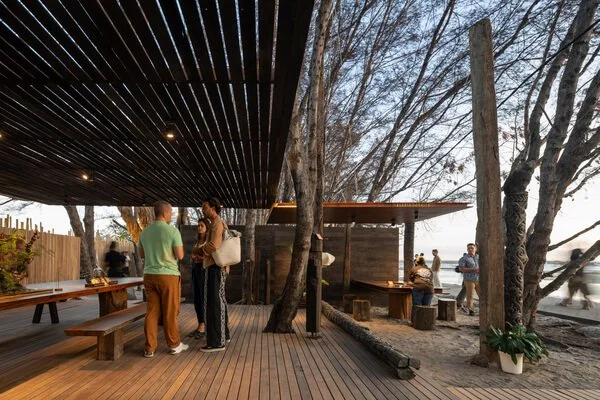
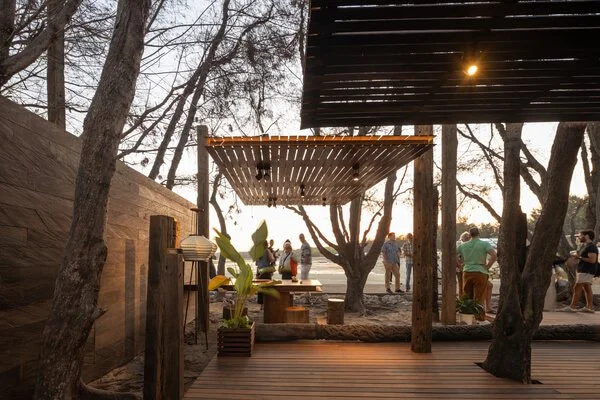
Reclaimed ironwood was assembled into a series of horizontal and vertical planes, creating a structure that appeared to float between the trees. Instead of enclosing the space, the pavilion opened it up. You could see through it, walk around it, and remain aware of the landscape on every side.
There was no clear moment where nature stopped and architecture began.
That was the point.
But Nature Weave didn't end with the structure itself. Once inside, visitors found another interpretation of the theme — one that was much harder to miss.
The aquascape that stopped people in their tracks
Exotiscape's aquascape table quickly became one of the most talked-about elements of the pavilion.
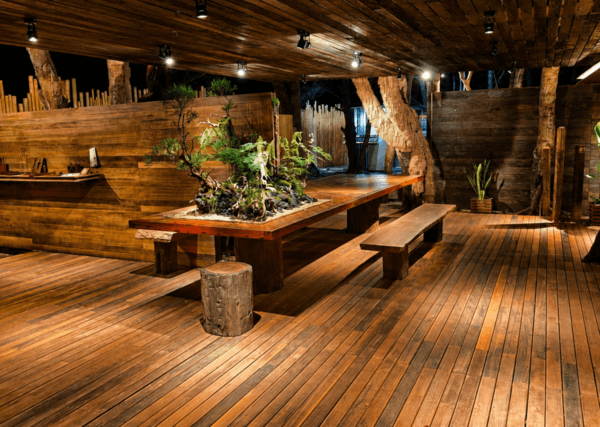
It looked, at first, like a dining table. Then came the realisation that there was an entire living environment built into it: water, a fountain, fog and fish moving through the space.
People stopped. They looked closer. They asked questions.
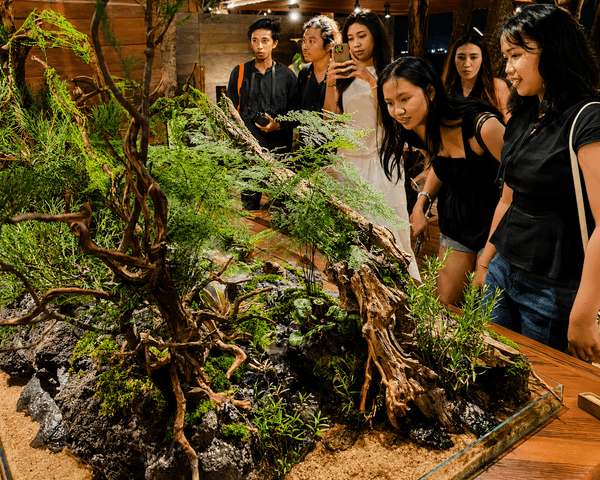
And suddenly, a piece of furniture had become part of the conversation about nature and design.
It was also a perfect example of what we wanted the pavilion to do. Nature Weave wasn't about decorating architecture with elements of nature. It was about finding ways for living systems, materials, architecture and people to exist together.
The aquascape table simply made that idea impossible to ignore.
Making it work on the ground
The finished pavilion looked calm. Getting it there was less so.
The site at Pengembak Beach came with uneven ground, established trees and very little interest in making installation easy. The team, assisted by Getsemani Construction and Kayu Beton, helped bring the structure from concept to reality. They had to adapt the structure to the site as it was being assembled, rather than expecting the site to conform to the plans.
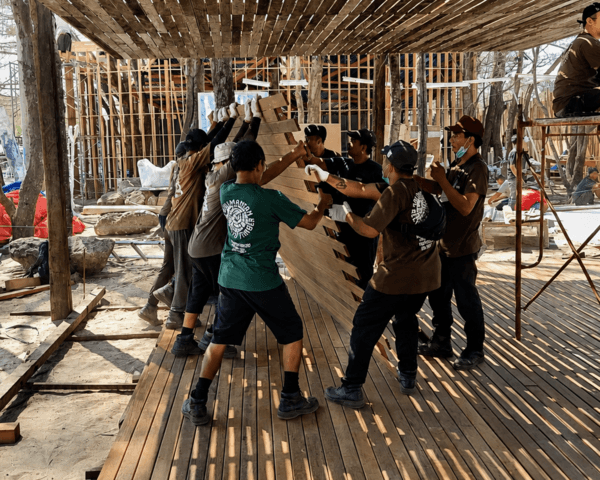
It meant adjustments, problem-solving and plenty of work in the heat.
But once the pavilion was finished, those challenges became almost invisible. The structure looked as though it had always belonged between the trees.
A place for conversations
The pavilion also became something slightly different once JIA Curated opened: a meeting point.
Existing Kaltimber customers came to see the installation and share their experiences. Homeowners stopped to talk about future projects. Architects and architecture studios were interested in the reclaimed ironwood, its history and the possibilities of using it in their own work.
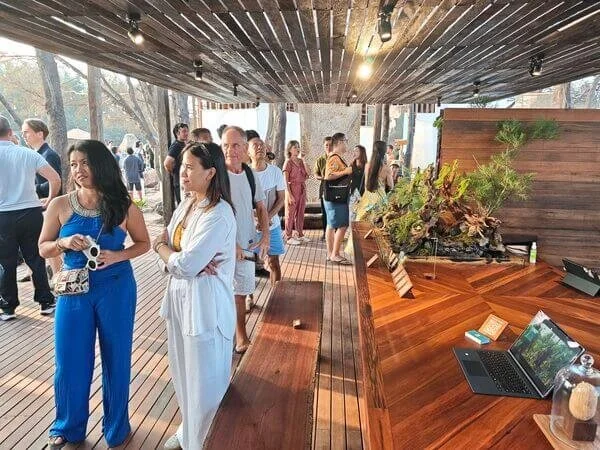
And then there were the people who simply wandered in because something had caught their attention.
Sometimes it was the timber. Sometimes it was about the unusual structure.
That is part of what made the atmosphere at JIA Curated so enjoyable. With the exhibition spread through the trees and along the beach, conversations happened naturally. People weren't simply walking past products; they were stopping, looking, asking questions and discovering the stories behind them.
For Second Growth, that human interaction was just as important as the architecture.
One pavilion, many hands
Although Kaltimber and Alexis Dornier were at the heart of Second Growth, the pavilion became much richer because of the people and companies who contributed to it.
Kitaru Lumberyard brought reclaimed bangkirai and teak into the -mostly- reclaimed ironwood project project. Naturanexa showed how reclaimed ironwood can move into architectural components, while I-Rewood demonstrated another way to give timber offcuts a second life.
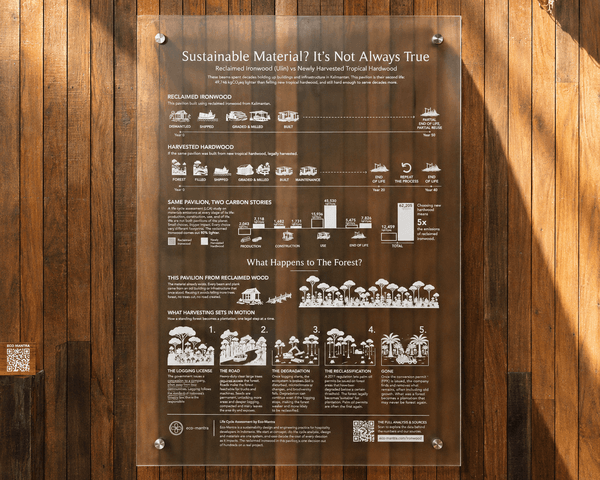
Eco-Mantra contributed the Life Cycle Carbon Footprint Assessment, adding another layer to the conversation about the pavilion's environmental impact, assisted by Replant World who connected the project to forest regeneration
The result could easily have felt like a collection of different ideas placed under one roof.
Instead, the challenge was to make those ideas connect.
That became another interpretation of Nature Weave: different materials, disciplines and perspectives coming together without losing their individual character.
What happens after five days?
Perhaps the most interesting part of Second Growth is what happened once the exhibition ended.
The pavilion was always intended to be temporary. The materials were not.
The main canopy has now been dismantled, with its structural elements moving into a new order of battens. The timber boards are returning to stock and will become cladding for a villa in Pererenan.
The wall panels that were not sold are also finding new uses. Some will become decking for another exhibitor, while another section will be kept as a sample.
So the pavilion that stood at Pengembak Beach for five days is already being transformed into several different things.
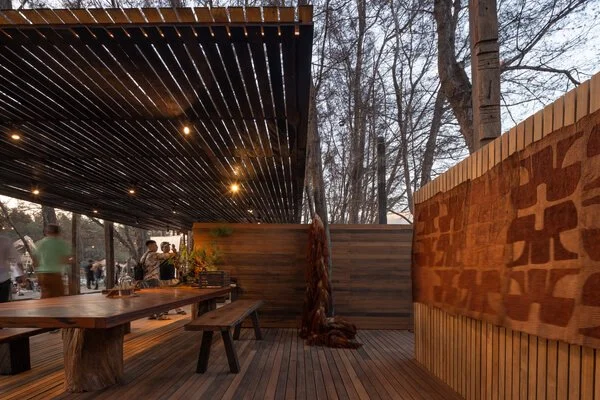
That was part of the thinking behind Second Growth from the beginning: reclaimed material should not simply be used once and then discarded. It should be given the opportunity to keep moving.
JIA Curated was one chapter in the story of Second Growth.
The next ones are already being built elsewhere.