In January 2026, European timber buyers are already operating as if EUDR is here. Not because the enforcement date is tomorrow, but because the EU’s December 2025 decision to delay EUDR by one year has created something very specific: a final preparation window. But Kaltimber has always been ready!
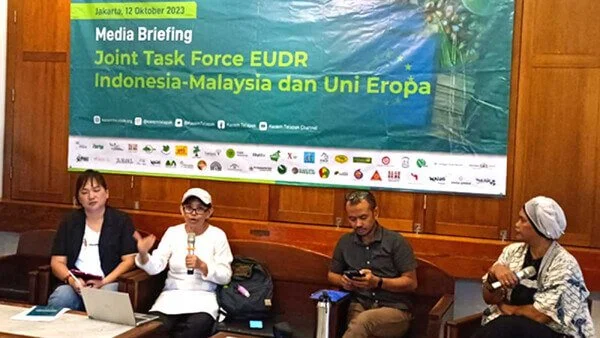
That’s indeed where Kaltimber comes in. We make reclaimed wood decking and flooring, and we welcome EUDR because it rewards the way we already work: no harvesting, no mixed origin stories, and full traceability from source structure to finished product. For European importers, that means less uncertainty, smoother due diligence, and a supplier you can defend internally.
Why EUDR matters for reclaimed wood—and why it matters for your next order
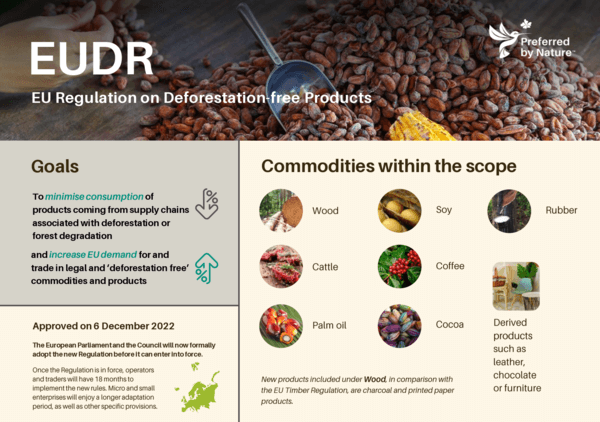
EUDR is pushing European importers toward one priority: reduce exposure to unclear origin. The regulation focuses on deforestation-free supply chains (with the 31 December 2020 cutoff) and due diligence that can be proven with documentation—not just claimed.
In 2026, the practical impact is simple: procurement teams are tightening their supplier lists now so they’re not scrambling in Q4. They’re choosing materials and partners that make compliance easier. One thing for sure, Indonesia needs to get its act together.
Reclaimed wood—when it’s genuinely reclaimed and properly documented—fits that direction naturally. It’s not a shortcut. It’s a lower-risk category when the supplier can prove:
the wood truly comes from disused structures
the chain of custody is controlled (no mixing)
records are consistent and shipment-ready
This is the lane Kaltimber has built its entire operation around.
Kaltimber’s reclaimed sourcing: real structures, real documentation
Kaltimber produces reclaimed wood decking and flooring from timber recovered exclusively from structures genuinely slated for dismantling or demolition. We do not harvest wood.
Our sources include:
old bridges and jetties
boats and maritime components
warehouses and industrial buildings
structural elements from regions like Kalimantan, where Borneo ironwood (Ulin) has historically been used so widely it helped build entire villages

This matters because it replaces a vague origin story with something tangible: a physical site, a documented recovery process, and a controlled path into production. In an EUDR-minded procurement environment, that clarity is everything.
SVLK certified—and structured for EU due diligence in 2026
Kaltimber is SVLK certified, Indonesia’s timber legality verification system. SVLK provides a strong legality backbone—still essential for EU buyers building procurement files that need to be coherent and defensible.
But EUDR-era confidence doesn’t come from one document. It comes from a system. That’s why Kaltimber’s approach is built around shipment-level discipline:
documented origin from specific disused structures
batch identification and tracking through processing
segregation controls to prevent mixing
production records aligned with export requirements
consistent quality control (because messy batches create messy compliance)
If you’re an EU importer, the value is practical: your team isn’t chasing missing details—it’s receiving a supplier pack that makes sense.
We were FSC certified in the past, and we chose to discontinue it. The reason wasn’t a change in values—it was a change in impact.
Over time, the process became disproportionately administrative. Audits increasingly revolved around formatting details (yes, even punctuation), while what European buyers truly value—meaningful inspection and verification—was not emphasized. In our case, auditors never came to inspect our premises.
So we doubled down on what matters most in 2026: traceability you can prove, physical controls you can verify, and documentation that supports real due diligence.
Why we welcome EUDR: it rewards the way we already work
The EUDR delay confirmed in December 2025 moved the main application date to 30 December 2026 for large and medium operators/traders (and 30 June 2027 for small/micro).
But the market reaction is happening in 2026. Many suppliers are trying to bolt traceability onto complex sourcing models. We don’t need to retrofit. We welcome EUDR because it highlights the gap between:
suppliers who can prove origin and control, and
suppliers who rely on broad claims and inconsistent records
EUDR doesn’t reward storytelling. It rewards systems—and that’s a competitive advantage for Kaltimber.
Already trusted in Europe—France and Denmark included
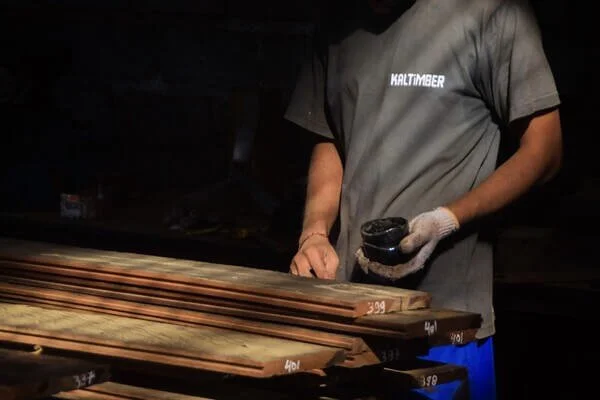
European importers already choose Kaltimber, including clients in France and Denmark, because they want reclaimed timber that performs and a supplier that can back up every shipment with consistent documentation.

And because we specialize in decking and flooring, our reclaimed products aren’t positioned as “rustic-only.” They’re processed for architectural use where performance matters: outdoor environments, hospitality projects, pool surrounds, and high-traffic spaces.
The takeaway for 2026: importers are choosing “easy to verify”
Here’s the real story of 2026: the EUDR deadline is fixed, but the supplier decisions are happening now. Importers are reducing risk by choosing partners that are transparent, consistent, and document-ready before Q4 pressure hits.
If you’re importing into Europe and want reclaimed wood decking and flooring with traceability built into the product—not added at the last minute—Kaltimber is ready.
Reach out anytime—online or at our showroom. We’ll guide you through the best reclaimed wood option for your project, and if your plan doesn’t suit what we do, we’ll tell you.